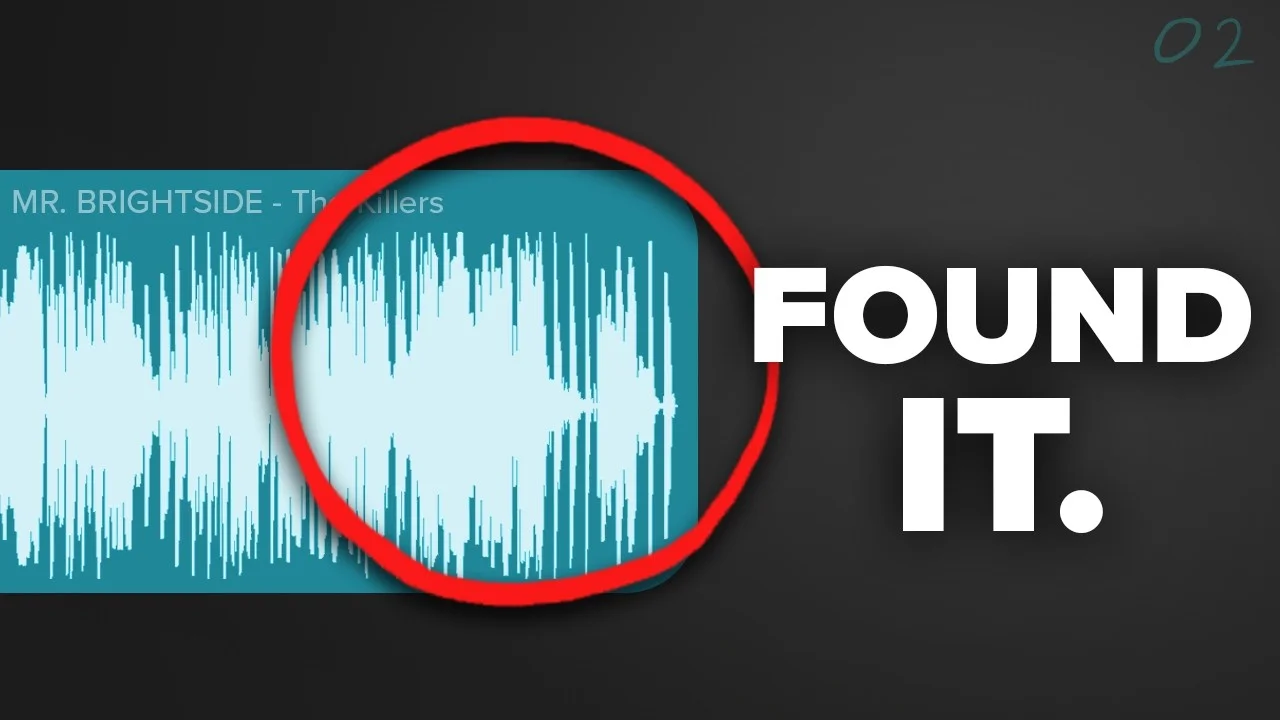
I Analyzed 3,054 Hit Songs to Find What #1's Do Differently
What separates a #1 hit song from the rest? Is it catchiness? Sing-ability? Lyrics? Pure luck? In this video, I use the data I collected from analyzing 3,054 bi

Key Takeaways
- Hit vocals sit 0.8 dB louder than non-hits in modern songs
- Number one hits use significantly more vocal compression than other chart songs
- Modern hits pack 14% more words than non-hits across all genres
- Hit songs create more space in arrangements for vocals to shine
- 2020s number ones have 82% more profanity than non-hits
I spent months analyzing every single Billboard hit from the last 35 years — that’s 3,054 songs total.
My goal was simple: find out if there’s actually a difference between the songs that hit #1 and everything else that charted. Is there some secret pattern that separates the chart-toppers from the rest?
After diving deep into the data, I can tell you it’s not what most producers think. It’s not tempo, it’s not EQ, and it’s definitely not song structure.
I also made a full video on this…
All the ideas in this article come from the video below. If you don't feel like reading, well, I gotchu.
What it actually comes down to is way more interesting — and it’s all about the vocals.
The Things That Don’t Matter (Spoiler Alert)
Let me get this out of the way first. Most of the stuff producers obsess over? It doesn’t separate #1 hits from the rest of the pack.
Keys Don’t Make Hits
Every producer seems to have a favorite key. “Produce in A♭ and your bass will punch through sub systems!” Or “F is the perfect vocal range for male singers!”
I’ve heard it all before, so I ran the numbers.
Songs that charted at #2 and below were 63% major and 37% minor. Number one hits? 65% major and 35% minor.
Pretty much identical. A key does not make a good song.
Tempo Doesn’t Matter Either
The median tempo for #1 songs was 117 BPM. For non-hits, it was 120 BPM.
Three BPM difference. That’s basically nothing.
Take a look at these songs that are all exactly 120 BPM — some were massive hits, others weren’t. Tempo clearly wasn’t the deciding factor.
Song Structure Is a Wash
I figured maybe hits were catchier and shorter, right? That’s what everyone says.
Wrong.
According to the data, a song that peaks at #1 and a song that peaks at #12 generally have the same skeleton. You could have Kendrick Lamar’s “Not Like Us” or Whitney Houston’s “I Will Always Love You” — both peaked at #1, totally different structures.
EQ Curves Look Identical
This one hurt a little because I literally made a video about the “hit vocal EQ curve.” But the data doesn’t lie.
The mix EQ curve of #1 hits versus non-#1 songs? They’re almost identical.
If you have a good mix, that’s the prerequisite. But remember — I’m comparing hit songs to other hit songs here. All these tracks were successful and well-mixed. The EQ just isn’t what separates the #1s from the rest.
When I Almost Gave Up (Then Found Gold)
At this point, I thought I didn’t have a video. The data wasn’t showing anything interesting.
Then I stopped comparing #1s to the rest and decided to split everything by decade: ’90s, 2000s, 2010s, and 2020s.
That’s when everything changed.
The 1990s: Everything Was Equal
In the 1990s, #1 hits and the rest were practically identical in every metric.
The vocal dynamic range for #1s was 37.7 decibels. For everything else? 37.7 decibels. The exact same number to the decimal point.
Word count was the same. Profanity levels were nearly identical (actually, #1s had slightly less).
If you were an alien visiting Earth and had never heard these songs, there’s not a single shot you’d be able to distinguish a #1 from a non-#1 based on the audio alone.
The 2020s: Everything Changed
But once you move past the 1990s into the 2020s? That’s where things get fascinating.
Vocal Compression Became King
Starting around 2012, something shifted. The vocals on #1 hits started getting slightly more compressed than their non-hit counterparts.
This trend continued, and by 2024, #1 hits have significantly less dynamic range in their vocals than non-hits.
Let me give you some examples that really drive this home:
Whitney Houston’s “I Will Always Love You” has 58 decibels of dynamic range. That’s a massive gap between the loudest and quietest parts.
Compare that to Doja Cat’s “Paint the Town Red,” which has 8.8 decibels of dynamic range. Her waveform is basically a straight rectangle at this point.
And it’s not just Doja. A ton of modern #1 hits are completely smashed flat.
It’s Not Just Hip-Hop
My first thought was that this was happening because of rap’s takeover of modern #1s. In the ’90s, rap wasn’t as popular, but as it became mainstream, the compressed sound of rap vocals dragged everything down.
So I ran the analysis again with rap and R&B removed.
The findings got stronger.
Other genres were actually driving this change more than rap and R&B. Country saw the biggest shift — in the ’90s, country had an average of 56 decibels of vocal dynamic range. Today? 21 decibels.
The same story holds true for Latin, pop, and even Christian and gospel music. The only exception is hip-hop, because when hip-hop first started, the vocals were already squashed super loud.
Modern Hits Are More Mono Compatible
It’s not just compression driving this trend. Modern #1 hits are also slightly more mono than their non-hit counterparts.
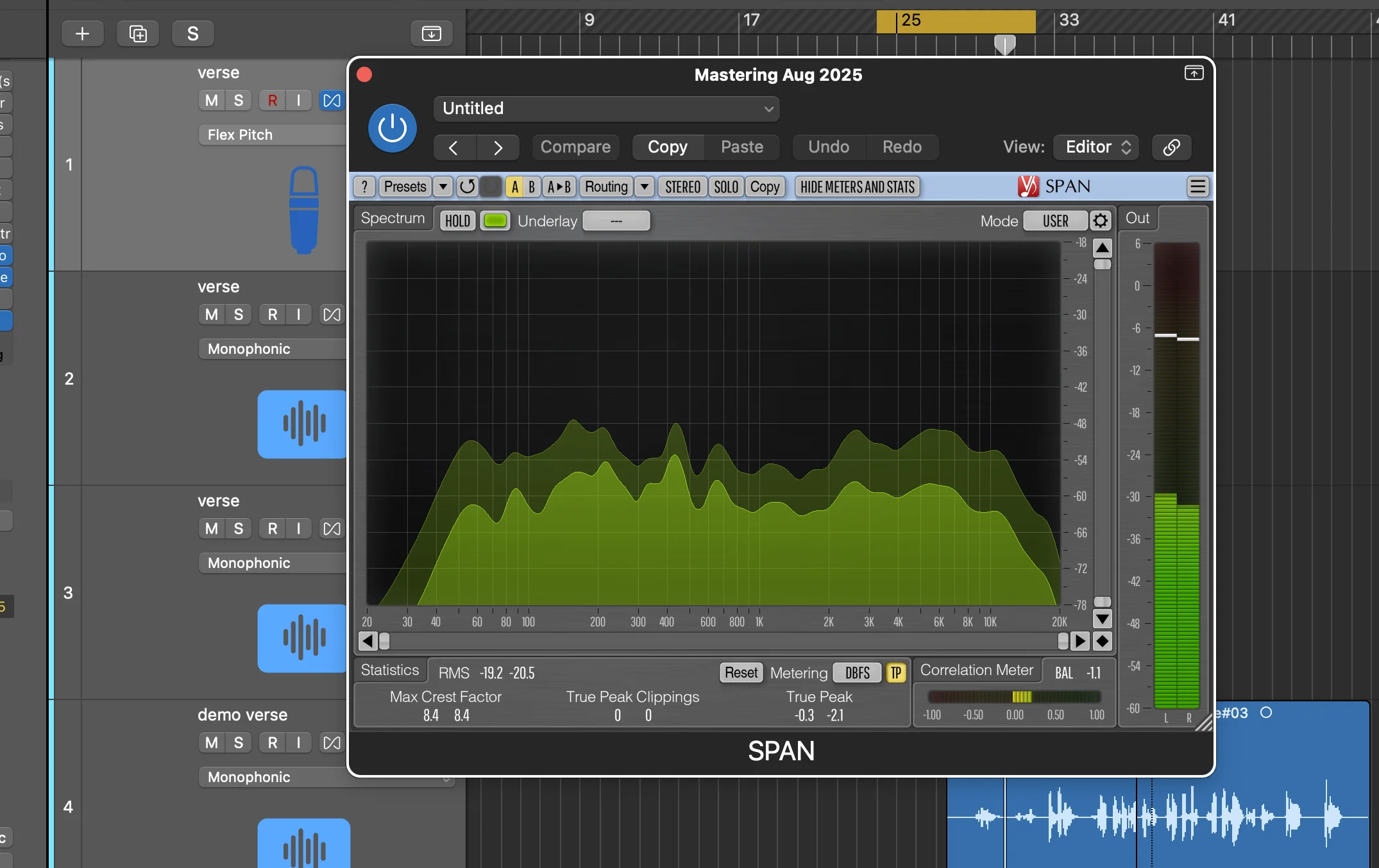
Just like in the ’90s, this gap didn’t exist at all back then. But in today’s era, vocals are more compressed and mixes are slightly more mono compatible.
The Word Count Explosion
Vocals weren’t the only thing that changed. Lyrics did too.
In the ’90s, #1 hits and non-hits had basically the same average word count per song — around 320 words.
But by the 2020s, #1 hits started packing in about 14% more words than non-hit songs.
Again, I thought this might be because hip-hop was getting more popular and generally has more words. So I excluded hip-hop and R&B from the analysis.
The data still held true. Every genre was getting wordier, not just rap and R&B.
The Profanity Flip
This one was fascinating. For three straight decades — the ’90s, 2000s, and 2010s — #1 hits had less profanity than non-hits.
Back then, being clean was the winning strategy. Whitney Houston, Boyz II Men, Alicia Keys, Mariah Carey — not a single explicit word in their hits.
But the 2020s? That completely flipped.
Today’s #1 hits have 82% more profanity than non-hits. Compared to the 2010s, today’s hits have four times the amount of profanity.
And before you say “it’s because of hip-hop” — nope. I pulled out hip-hop and R&B again, and every single other genre is getting more profane.
What This Actually Means for Your Mixes
All this data is interesting, but it won’t help you unless you know what to actually do with it.
Here’s what I found that most #1 hits are doing today that most home producers aren’t.
Hit Vocals Sit Louder
Hit vocals sit louder relative to the instrumental than non-hit vocals.
In hit songs, the instrumental-to-vocal ratio is about -2.55 dB on average. In non-hit songs, it’s around -3.35 dB.
That means the vocal is nearly a full dB louder in hit songs.
For context, Adele’s “Hello” has the vocal sitting just a smidge louder than the instrumental itself. That’s pretty much the perfect balance right there.
If you’re not sure where your vocal should sit in the mix, I built a free Vocal Analyzer where you can drop your vocal in and it’ll tell you how it compares to these analyzed hits. You’ll get EQ and compression stats, plus recommended signal chains you can actually use.
Space Is Everything
It’s not just about loudness — it’s about space. The arrangement stays out of the vocal’s frequency range.
Think about “Hello” again. It’s basically just low piano and her voice. There’s so much room for the vocal to come through and shine.
Or take Bad Bunny’s “Dakiti” — it’s a super sparse arrangement where the vocal is the absolute star.
These arrangement choices aren’t necessarily EQ moves. You can use EQ to help carve space, but most of these decisions happen in the arrangement phase.
The Big Picture: It’s All About the Vocal
After analyzing 3,054 songs, here’s what I learned about #1 hits:
The trend in all these findings comes down to one thing — the vocals themselves.
The melody and vocal performance IS the song. It’s the most important element. And if you get that right, it makes perfect sense why you’d want to showcase the vocal more.
If I had to describe what songs have evolved into over the past 35 years, it would be this: compressed, clear, and upfront vocals.
Almost every single #1 hit from the last five years follows that pattern. And I imagine it’ll continue that way.
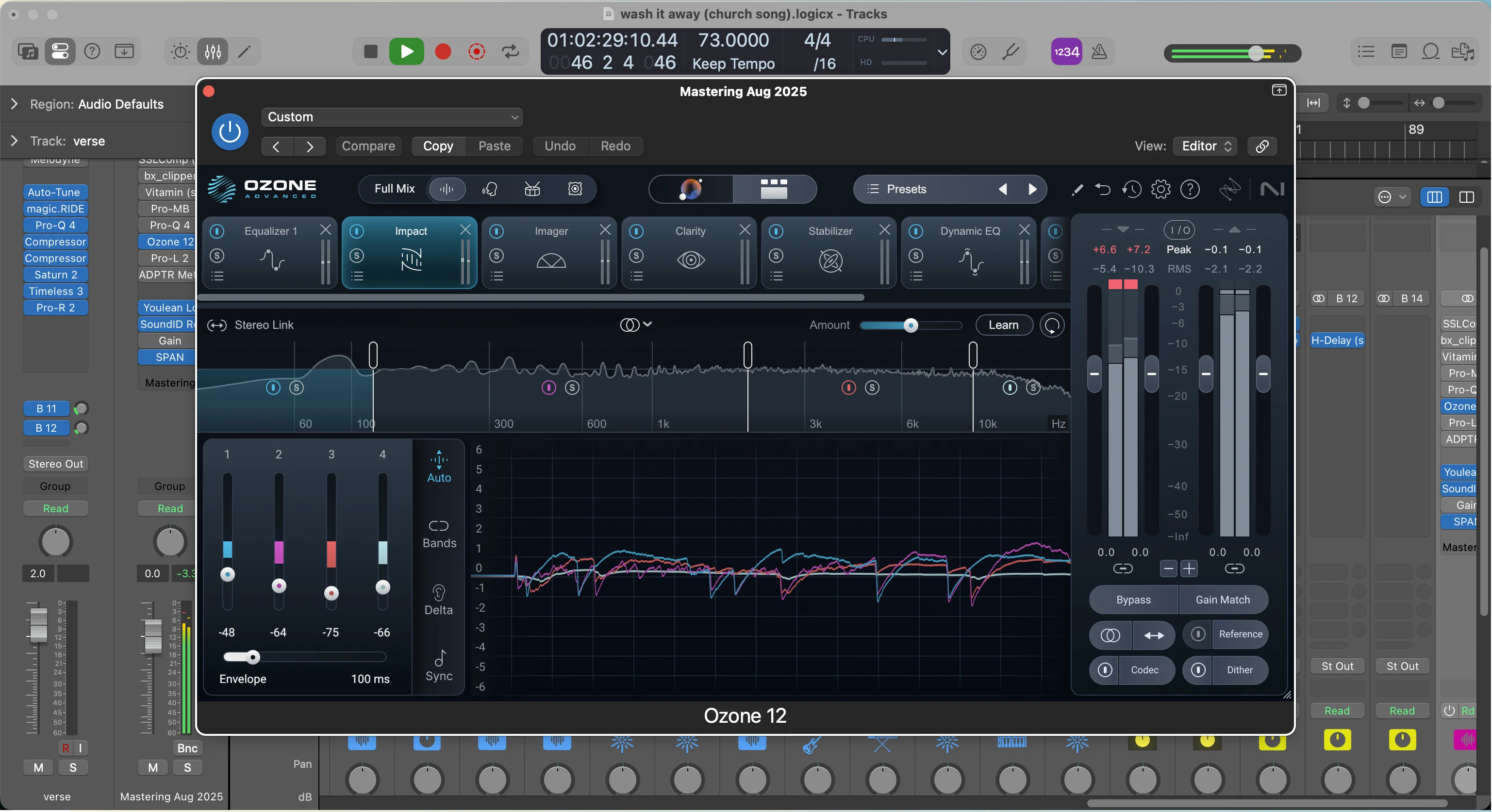
The data shows that over 35 years, #1 hits and non-hits are starting to spread apart more. The winners are using more compressed vocals, wordier lyrics, more profanity, and giving their vocals way more space to breathe.
Your mix should reflect this reality. Make your vocal the star — compress it appropriately, give it space in the arrangement, and don’t be afraid to push it forward in the mix.
That’s what separates the chart-toppers from everything else.
Not sure what’s wrong with your vocal? Run it through my free Vocal Analyzer - it scores your vocal from 0 to 100 and gives you specific recommendations on what to fix first.
About Mattie
Mattie is a music producer, songwriter, and educator specializing in Logic Pro and vocal production. With over 10 years of experience in the music industry, he's helped thousands of artists transform their home studio recordings into professional-quality tracks.
As the founder of Music By Mattie, he creates tutorials, presets, and courses that simplify complex production techniques. His mission is to make professional music production accessible to everyone, regardless of budget or experience level.