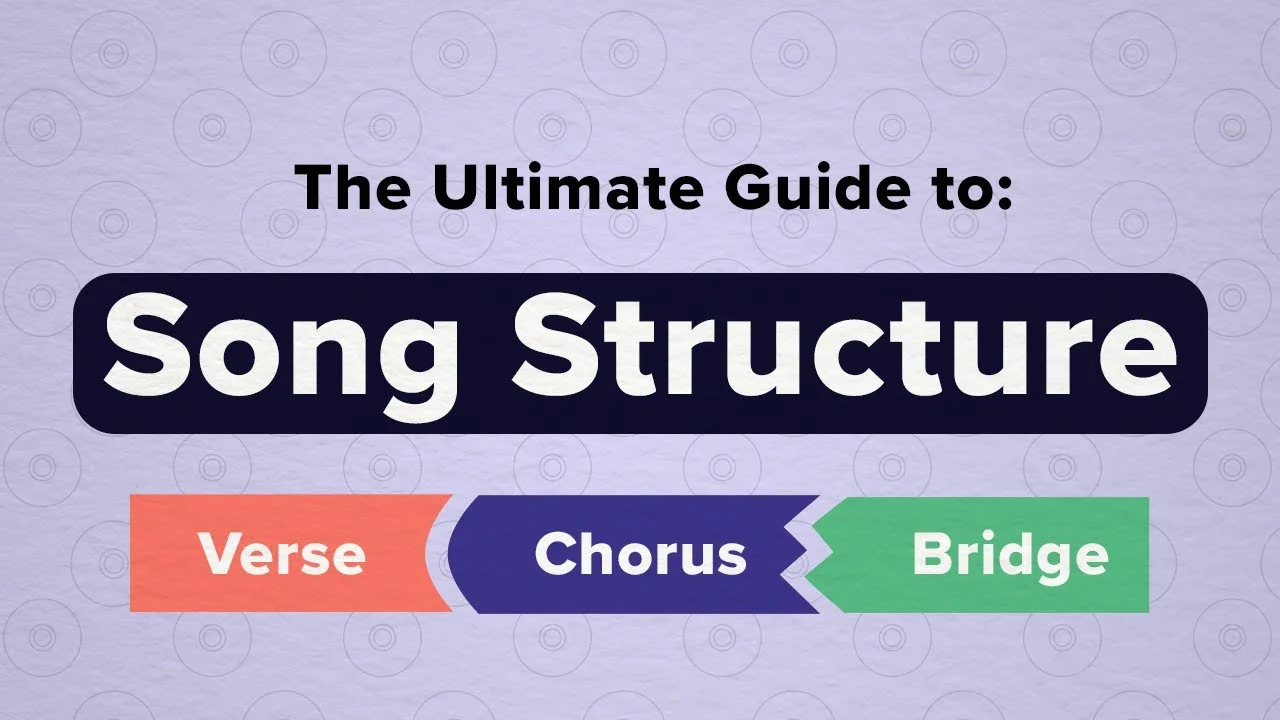
What is Song Structure? The 5 Most Popular Types! (w/ Real World Examples!!)
What is song structure and how can I use it to make music? This video will dissect what it is and how it can affect your sound. I will also give the 5 most popu

Key Takeaways
- Song structure is the roadmap guiding listeners through your track's different sections.
- Verses set up the story while choruses deliver the emotional hook people remember.
- Keep section lengths consistent and don't reinvent melodies between similar sections.
- The bridge provides crucial variety after repetitive verse-chorus patterns to maintain interest.
- Start with proven structures like verse-chorus-verse-chorus-bridge-chorus before experimenting creatively.
One of the biggest problems I hear in amateur productions? Bad song structure.
Nothing makes a track sound more unprofessional than confusing arrangement. When listeners can’t follow the flow of your song, they’re hitting skip faster than you can say “verse-chorus-verse.”
But here’s the thing — even if you think you know song structure, most producers are making critical mistakes that kill their tracks before they even get started.
I’m going to break down exactly what song structure is, show you the most common mistakes that scream “amateur,” and give you the five most popular song structures used by hit songs across every genre.
I also made a full video on this…
All the ideas in this article come from the video below. If you don't feel like reading, well, I gotchu.
Part of the Songwriting series — For the full picture, read my complete songwriting guide.
What Is Song Structure (And Why It Matters)
Song structure is how your song changes over time.
It’s the roadmap that guides listeners through your musical journey — from the opening verse to that final chorus. Think of it as the skeleton that everything else hangs on.
Song structure consists of different sections with names you’ve heard a million times: verse, chorus, bridge, pre-chorus. These sections make it easier for listeners to understand and follow what they’re hearing.
Without clear structure? Your listeners get lost, bored, or confused. And confused listeners become former listeners.
The magic happens when each section serves a specific purpose and flows naturally into the next. Your verse sets up the story, your chorus delivers the emotional payoff, and your bridge gives everyone a breather before the final impact.
Understanding The Verse — Your Song’s Foundation
The verse is usually the first thing people hear, which means it’s got one job: set the vibe for everything that follows.
Here’s what makes verses special — they repeat themselves. Not the lyrics (that would be weird), but the melodic structure and chord progressions. Verse two should feel familiar because it follows the same musical blueprint as verse one.
Take Gloria Gaynor’s “I Will Survive” as a perfect example.
Listen to the first verse, then jump to the second. The melody Gloria sings? Nearly identical. The chord structure underneath? Same foundation. But the second verse brings more energy while keeping that familiar feel.
The lyrics change, but the musical DNA stays the same.
That’s the secret sauce. Listeners need that familiarity to latch onto your song. Give them a completely different melody in verse two and you’ve broken the unspoken contract between artist and audience.
The Chorus — The Prom King of Song Sections
If song structure had a popularity contest, the chorus would win by a landslide.
The chorus is the most important part of your song. Full stop. It’s the part that gets stuck in people’s heads during their morning commute. It’s what they sing in the shower. It’s probably why they fell in love with your track in the first place.
Here’s what separates great choruses from forgettable ones:
- Catchiness over complexity — simple melodies stick
- Repetition is your friend — the same lyrics, melody, and chords every time
- Emotional peak — this is where the feeling hits hardest
The Beatles understood this perfectly with “Let It Be.” That chorus? Dead simple. But try getting it out of your head once you hear it.
“Let it be, let it be, let it be, let it be — whisper words of wisdom, let it be.”
I bet you’re humming it right now.
The chorus should encapsulate the general feeling of your entire song in just a few lines. While your verse sets up the storyline, your chorus delivers the emotional punch that makes people care.
The Bridge — The Black Sheep That Saves Your Song
The bridge gets overlooked more than any other section, but it might be the most important for keeping listeners engaged.
After hearing the same verse and chorus pattern for three minutes, people need a break. Something that feels connected to the rest of the song but shakes things up enough to reset their attention.
The bridge is your musical plot twist.
OutKast’s “Hey Ya!” has one of the most memorable bridges in music history. Right when you think you know where the song is going, they flip the entire rhythm and throw you that iconic “shake it like a Polaroid picture” moment.
The bridge changes up the rhythm, the melody, the entire feel — but it stays in the same key and maintains the song’s core identity. That’s the balance you’re looking for.
Without bridges, songs get boring. With bad bridges, songs get confusing. But nail that bridge and you’ve got listeners hooked until the very last note.
The 3 Biggest Song Structure Mistakes (And How To Avoid Them)
Mistake #1: Not Understanding What Song Structure Is
This is the big one. I hear it constantly in amateur productions.
You’ve got a bunch of cool melodic ideas, interesting sound design, maybe even solid mixing — but there’s no obvious chorus. Or the song meanders for two minutes without any structural changes.
If I’m a minute and a half into your track and you haven’t shifted the chord structure or melodic content, I’m getting bored.
The fix? Think about song structure as you write. Have a roadmap before you start recording. Know where your verses end and your choruses begin.
Mistake #2: Changing Section Sounds Too Much
Beginners think they need to reinvent the wheel for every section. Verse one sounds completely different from verse two. The first chorus uses different chords than the second chorus.
Stop it.
Song sections define themselves through similarity to other sections with the same name. Verse one should sound like verse two. First chorus should match the second chorus.
This isn’t about being boring — it’s about meeting listener expectations. People have been trained by decades of hit songs to expect consistency within sections. Give it to them.
Mistake #3: Wildly Different Section Lengths
I’ve heard songs where the first verse is 8 bars, the second verse is 32 bars, and the chorus changes length every time it appears.
Consistency matters.
It’s not uncommon for your final chorus to be twice as long as earlier ones — that’s actually a great way to build energy. But if your last chorus is five times longer than your verse, you’ve lost the plot.
Keep section lengths consistent or make changes that feel intentional and musical, not random.
The 5 Most Popular Song Structures (With Hit Song Examples)
I analyzed hundreds of hit songs across every genre to find the most common structural patterns. Here are the five that dominate the charts:
Structure #1: Verse-Chorus-Verse-Chorus-Bridge-Chorus
This is the classic pop formula that’s been working for decades.
Why it works: Simple, predictable, and gives listeners exactly what they expect. The bridge provides that crucial breather before the final chorus impact.
Structure #2: Verse-Pre-Chorus-Chorus-Verse-Pre-Chorus-Chorus-Bridge-Chorus
The pre-chorus addition builds tension before each chorus, making the payoff even bigger.
Why it works: That pre-chorus creates anticipation. It’s like a musical windup before the pitch — when the chorus hits, it feels earned.
Structure #3: Chorus-Verse-Chorus-Verse-Chorus-Bridge-Chorus
Starting with the chorus grabs attention immediately. No slow build — just straight into the catchiest part of your song.
Why it works: In our attention-deficit world, hitting people with your strongest material first can be the difference between a skip and a save.
Structure #4: Verse-Build-Drop-Verse-Build-Drop (EDM Structure)
For electronic music, the traditional verse-chorus model gets replaced with tension and release patterns.
Why it works: Dance music is about energy management. The build creates anticipation, the drop provides release, and the cycle repeats with increasing intensity.
Structure #5: Verse-Chorus-Verse-Post-Chorus-Bridge-Chorus-Post-Chorus
The post-chorus extends the emotional impact of your main chorus, often with a simplified hook that’s even catchier than the chorus itself.
Why it works: Double the catchiness, double the chance something sticks in listeners’ heads.
Your Next Steps
Song structure isn’t about following rules — it’s about serving your listeners.
Every structural choice should make your song easier to follow, more engaging, or more emotionally impactful. When you understand why these patterns work, you can use them as launching points for your own creativity.
Start with one of these five structures for your next song. Pick examples from your favorite artists who use these patterns and study how they handle transitions between sections.
Remember: the best song structure is invisible to the listener but essential to the song. When done right, people don’t notice the structure — they just feel the flow.
And that’s when you know you’ve got them hooked.
Want the full walkthrough? My course Pro Vocals in 60 Minutes takes you from raw recording to polished vocal, step by step.
About Mattie
Mattie is a music producer, songwriter, and educator specializing in Logic Pro and vocal production. With over 10 years of experience in the music industry, he's helped thousands of artists transform their home studio recordings into professional-quality tracks.
As the founder of Music By Mattie, he creates tutorials, presets, and courses that simplify complex production techniques. His mission is to make professional music production accessible to everyone, regardless of budget or experience level.