Drake's Made the Same Song for 20 Years
Has Drake been making the same song for the past 20 years? I analyzed every one of the 481 songs he's ever released to find out. Here's what I learned.
Key Takeaways
- Drake's vocal range stays within one octave 55% of the time at a consistent F#3 median
- His beats favor low-end frequencies 13dB heavier than highs with filter transitions over drops
- 53% of Drake songs never mention their own title in the chorus or lyrics
- Modern Drake tracks have 8 writers and 4+ producers vs 2 writers in 2009
One of these Drake songs came out in 2009. The other came out last month.
Two near-identical waveforms side by side — 17 years apart. That’s when I started to wonder: Has Drake been making the same song for twenty years?
To answer that question, I broke down all 481 songs he’s ever released. Every beat, every pitch, every lyric, and a ton more — all to see the elements that make Drake, Drake.
I also made a full video on this…
All the ideas in this article come from the video below. If you don't feel like reading, well, I gotchu.
Spoiler alert: the answer is more unsettling than you’d think.
The Voice That Never Changed
So where do you even start with someone who’s made 481 songs?
I went to the hardest part to fake: his voice.
One of the biggest things I thought would separate Drake from other rappers is how much singing he does. Turns out that number is harder to quantify than you’d expect.
I separated all the vocals from his songs to isolate his voice, then ran them through an algorithm that predicted the likelihood of him singing vs rapping. The algorithm analyzed two key factors: the sustain of notes (how long he held them) and the pitch of the notes.
Across his entire catalog, his sing-to-rap ratio was 22%.
22% of the time he was making sound, it was singing. Sounds straightforward, but here’s the problem — Drake tends to do both. A lot.
The Rap-Sing Problem
He rap-sings, if you will.
Much of his slower raps verge on the edge of singing. Much of his faster singing sounds a lot like rap. That, paired with his heavy use of Autotune, made my formula not super accurate for any individual song.
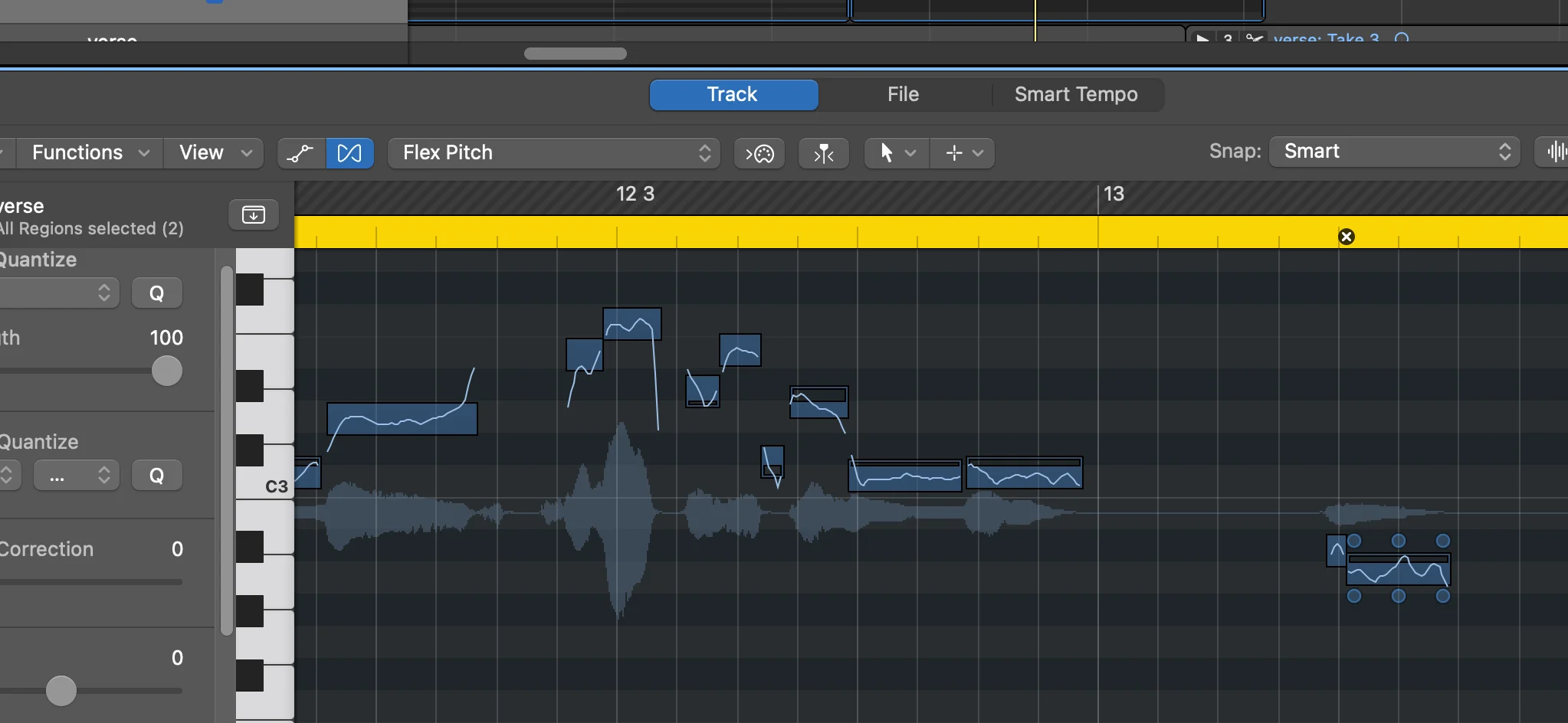
But I wasn’t trying to figure out that number exactly. What I was more interested in was how this number changed over time. If he really was releasing the same songs every album, this ratio should stay consistent regardless of individual accuracy.
And sure enough — across his entire 20-year career, his sing-to-rap ratio stayed within 20% to 33% across every album. Some songs he only sings, some he only raps, but the ratio remained locked in place across all his major releases.
The Natural Range Strategy
But copying the amount he raps vs sings wouldn’t make you a Drake song. You’d have to sing them in a similar range, right?
Well, yes.
Across all his songs, Drake tends to keep things natural. 55% of his songs keep his vocal range within one octave. He’s not reaching, he’s not straining. It’s a nonchalant, I-don’t-care rapping style that fits his brand perfectly.
You can see that exemplified in his median pitch across all songs: F#3. It’s a little higher than casual conversation, but significantly lower than where a singer would sit.
The voice is frozen in time. That actually surprised me — so I figured the change had to be in the beat.
The Beat Formula That Stayed Dark
Beats are what date a song. You can hear the year in the drums alone — the snares, the synths, the way it’s mixed.
If anything was going to give away twenty years passing, it was the instrumental.
The Basic Numbers Don’t Lie
The obvious place to start was tempo, key, and length.
His average song tempo gradually crept up from 95 to 120 BPM over time. The majority of his beats were minor at 68%. And maybe the most interesting finding: the median song length didn’t change across eras, staying around 3 minutes and 50 seconds.
Let me break that down by era:
- 2006-09: 3:38
- 2010-12: 4:14
- 2013-15: 4:02
- 2016-18: 3:39
- 2019-22: 3:46
- 2023-26: 3:46
The catalog median? 3:51.
68% minor key, every era. Median song length around 3:50, every era. The recipe was being followed on a kitchen scale.
The Producer Power Duo
If basic song numbers couldn’t tell me more about his curated vibe, then the producers making the beats could.
In his 20-year career, the sound of Drake mostly comes from a handful of producers. The producer he uses most is Noah “40” Shebib — responsible for 133 of Drake’s 481 tracks, around a third of his entire catalog.
That’s followed by Boi-1da, who produced 76 tracks for Drake.
Even these producers carry slightly different vibes — Marvin’s Room by 40 versus Energy by Boi-1da. They sound different, but to me they both share a heavy favoring of the low end. Their low end is their focus.
The Dark Sound Science
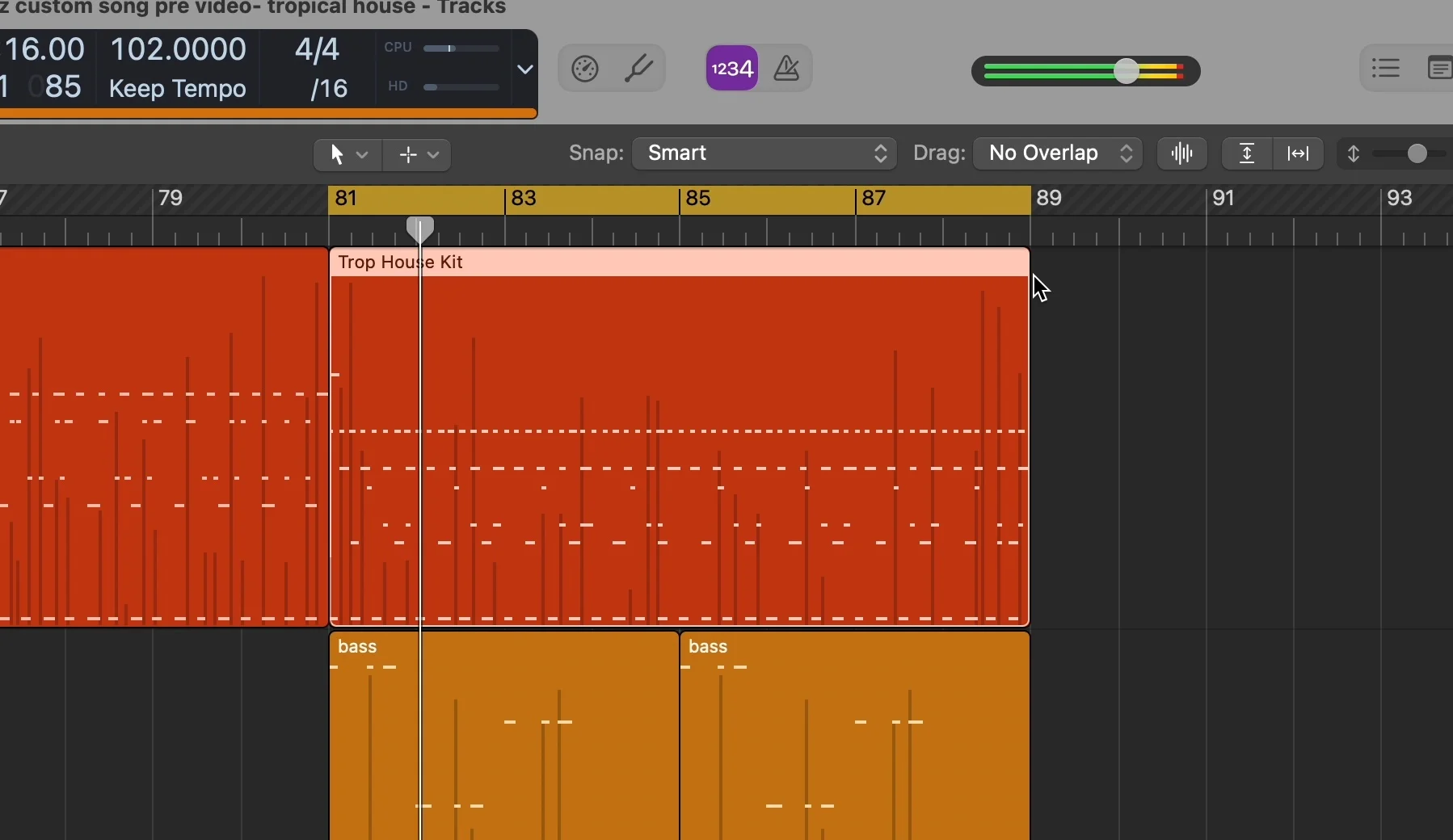
The beat is all bottom. Dark, low, half-empty — about 13 dB heavier in the lows than the highs. The vocal is the only bright thing.
And it stayed dark, then got slightly darker. The median spectral tilt drifted from -6 dB/oct in 2006-09 to -7 and -8 in 2016-22, to -7 today. He didn’t lose the dark — he doubled down on it.
As a producer, that sound is defined by one thing: filters. Filters only play the low or high part of a sound, and in this case many of Drake’s beats are heavily filtered to only showcase the low end. This makes it way easier to hear the vocal itself — when nothing masks the vocal, it’s that much easier to hear.
The Filter vs Drop Analysis
But it’s one thing to know that from my work as a producer, and another for the data to support the claim.
I used an algorithm to analyze every transition between song sections, determining if Drake used a drop or a filter as a transition.
Drops drop out the instruments and then reintroduce them on the chorus. Very common in EDM — leaves big moments of excitement.
Filter transitions take that beat and shrink it down. When the moment hits, you add more elements and take the filter up fully. It’s smoother, more chill, and more akin to the Drake nonchalant vibe.
He refuses to drop. Filter sweeps over hard drops, 4.5 to 1.
Pop music builds toward the drop — he builds the same tension and slides past it. Think of Hold On We’re Going Home, the famous sweep that never lands.
Across his catalog: 1,422 filter transitions to 325 drop transitions. A 4.38 to 1 ratio. And that ratio hasn’t budged since he started.
So now I’m two for two. Voice didn’t change. Beat didn’t change. I’m starting to get weirded out — so I went to the one part that had to be different: the lyrics.
The Lyrics That Tell the Same Story
Lyrics are where I expected to finally find some change.
The man’s lived a whole life between 2009 and now. The voice can stay the same, the beat can stay the same — but what he’s saying? That has to drift.
What you talk about at 19 is not what you talk about at 39.
So I pulled every word he’s ever rapped and went looking.
The Vocabulary That Never Evolved
The first place I checked was his top 20 most common words. Between 2006-09 and 2023-26, they have 45% overlap with each other.
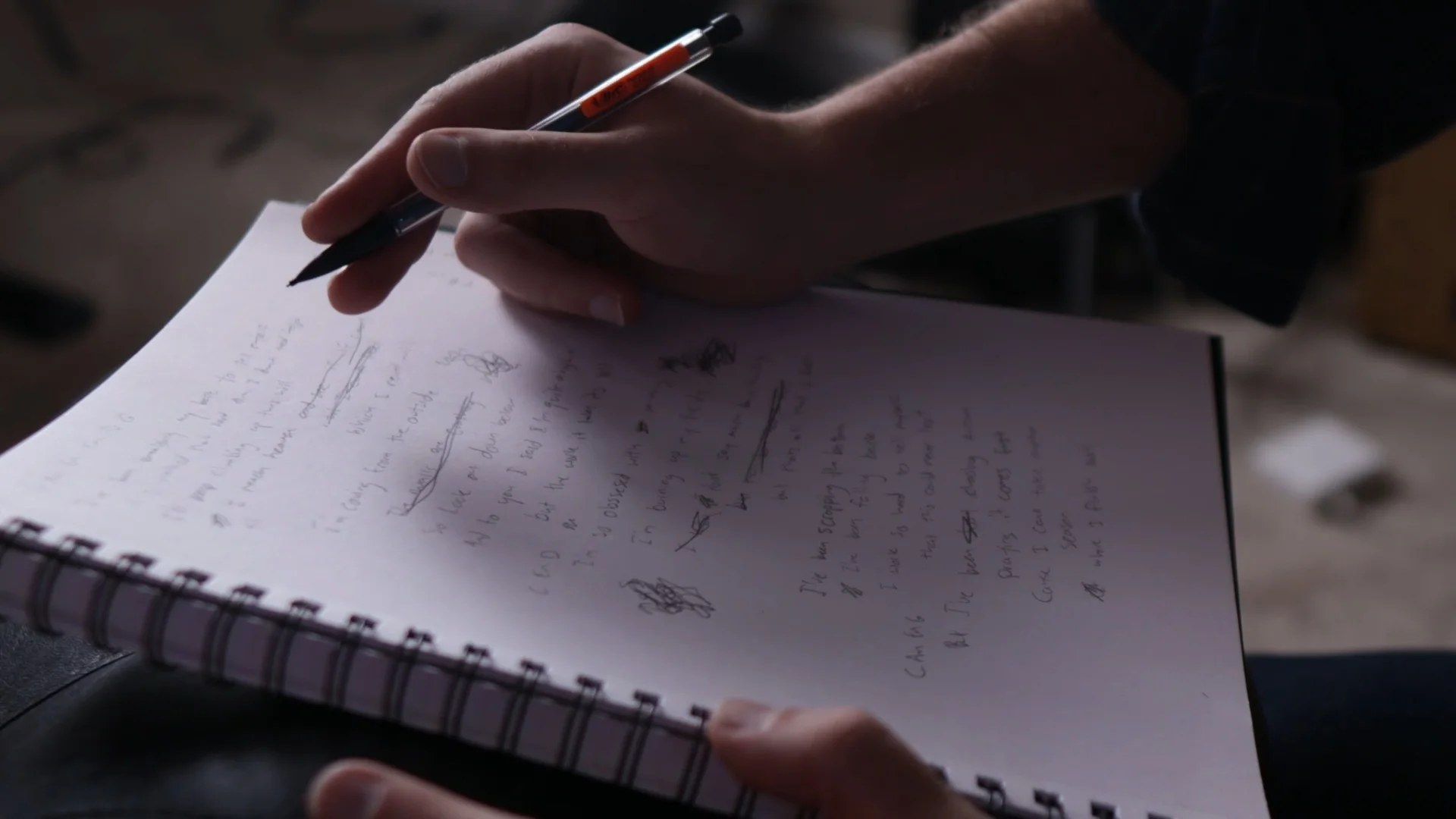
Words like: I’m, it’s, don’t, love, shit, one, ain’t, baby, girl — showing up again and again. Very similar vocabulary across his entire catalog.
I’ll admit these are pretty common words that a lot of songs probably use. So I had to go deeper.
The Thematic Breakdown
To analyze this pattern further, I broke down the overall themes from every era of Drake. Every era had a very similar spread of what Drake talks about.
Per 1,000 words:
- Women and love: 8.7 to 16.7 (consistently the dominant theme)
- Haters and doubt: 0.7 to 2.6 (always present)
- Success and fame: 1 to 2.4 (held steady)
- OVO and the crew: About once per 1,000 words, every era
Drake’s using a thematic lyrical palette to paint his sonic pictures. But you can’t just talk about women and use his most common words to make a Drake song.
There had to be more — specifically in the most important part of the song: the hook.
The Hook Formula That Breaks All Rules
The first thing I noticed was that almost a quarter of his songs didn’t have a chorus at all.
115 out of 481 songs are just straight rap — 5 AM in Toronto, Nice for Life. But those are the deep cuts. His biggest songs, the ones the whole world sings, those have hooks.
So what’s in them?
Short and Sweet Strategy
The first obvious thing: they’re short. Way shorter than his verses.
His verses average about 150 words and his choruses about 50. Way harder to chant a paragraph.
And inside that short hook, there’s a trick. About 20% of his chorus lines start with the same word. Started From the Bottom — the same line, over and over.
Repetition. That’s how a phrase gets in your head. He’s been using that exact percentage of repetition for 20 years.
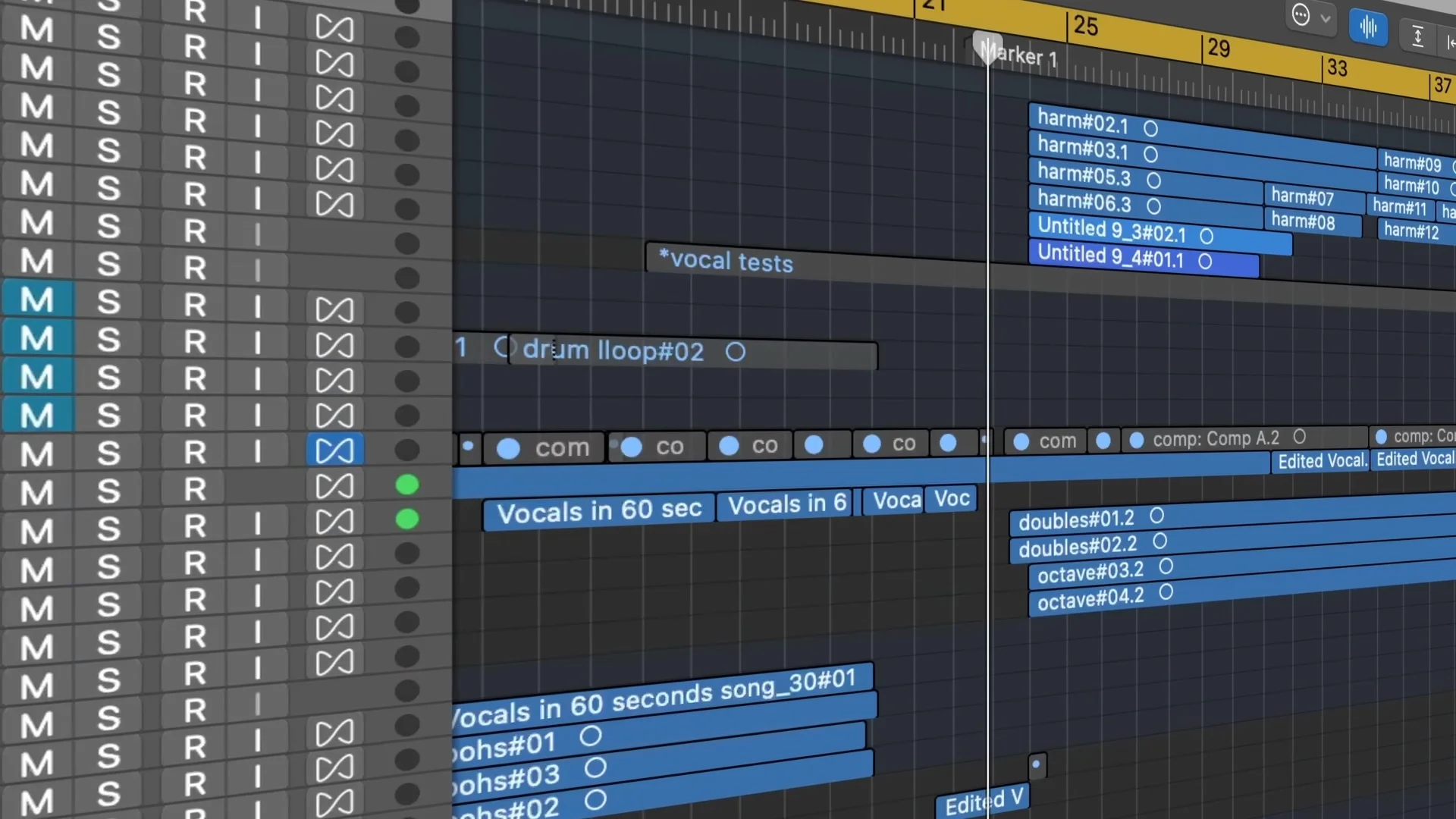
But everyone uses repetition. That’s not the Drake thing. What I really wanted to know was: what does pop do that he doesn’t?
The Title Rule He Refuses to Follow
There’s one rule that every pop songwriting class on Earth teaches: say the title of the song in the hook. Make it the chant. Plant it in the listener’s head.
It’s THE rule. The first rule.
Drake skips it. Not occasionally — 53% of his songs never say their own title. Not once.
Fear is 686 words long and never says “fear.” Passionfruit never says it. And it gets worse — in his most recent era, the number’s up to 64%.
He’s not just ignoring the rule. He’s doubling down on ignoring it.
Same voice. Same beats. Same lyrics and hooks. That’s three for three. That’s when it stopped feeling like a pattern and started feeling like something else.
The Impossible Machine
Because a Drake song isn’t just one person.
Twenty years ago, a Drake song had two writers — him and one other guy. Today? Eight. Eight people in the room, every track.
And the data can’t tell which song was written alone in 2009 and which was written by a committee last year.
The Expanding Creative Army
The more people he added, the more of the same types of songs came out. Which really started making me think there must be some sort of Drake framework they’re all following, even unconsciously, to make their music.
And it’s not just the writers. Producers tripled per song too — one and a half back then, over four now.
The total pool exploded. Back in 2009, his catalog used about 40 unique producers. In the last few years alone, he’s worked with 188 of them. Nearly 5 times more people in the engine room — and the songs, feelings, and vibes still didn’t budge.
The Three-Album Test

The same trend continues with his newest releases. He just dropped three albums in one night — Iceman, Maid of Honour, and Habibti.
Three full projects, and all three follow the same data trends I pointed out. The factory doesn’t even slow down.
The data showed I wasn’t looking at a person. I was looking at a system. A recipe so tightly defined that even with eight writers, four producers, and three albums in one night, the output is the same song.
Every time.
Testing the Drake Framework
Once you realize something’s a recipe, you start wondering if you could cook it.
And I’m a bit of a chef myself.
So I decided to test out the framework I had discovered. I put down all the goals — from his voice, to his beat, to his style — and used them as guideposts to see if I could come up with something similar.
After all, if Drake’s following a framework that lets him release the same song for 20 years, shouldn’t I be able to follow it too and get something that sounds, well, like Drake?
Building the Beat
I started with the beat — filtered in and heavy in the low end. Mid-tempo. Minor-focused.
Then I added the voice — not reaching, nonchalant, focused around his median note F#3.
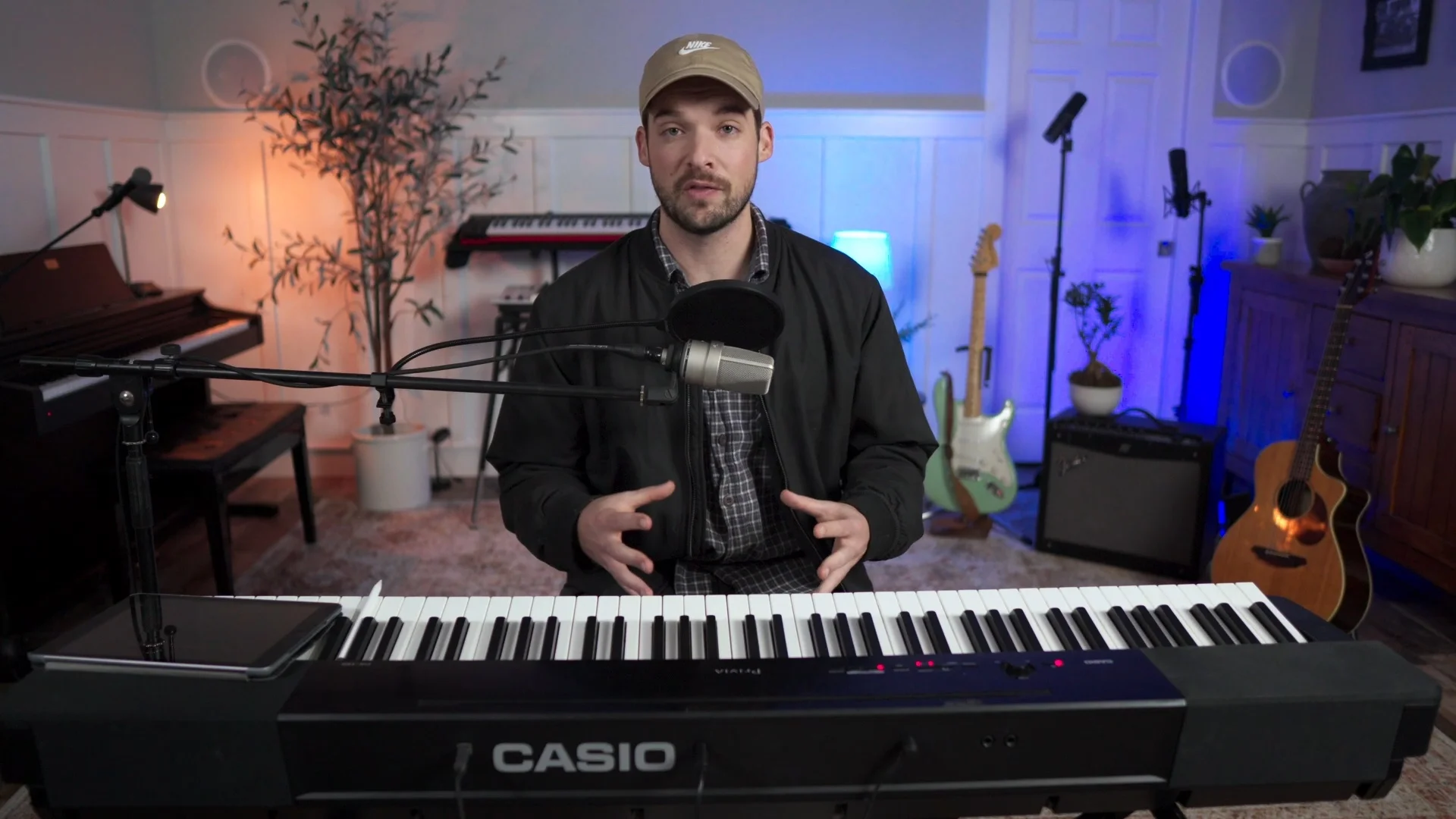
Then I added the lyrics — focusing on girls, repeated chorus lines, and a singable, catchy hook.
It sounded all right, but there was one more thing I had to do to make a true comparison to Drake. I had to sound like Drake himself.
The AI Voice Test
I took my voice and used AI to make it sound like Drake. There’d be no second-guessing between my voice and his — it would be a more accurate representation of the framework.
And to get it to sit perfectly on the average of his vocal curves, I used my Vocal Analyzer — a free tool I built specially for this kind of analysis.
The result? It’s definitely Drake-ish. I followed the framework and got something in the same ballpark as him.
But there’s something that still feels off.
The Wall Between Recipe and Mastery
My demo proves you can follow all the rules and data guidelines to a tee and still make something mediocre.
Part of me feels like this is Kroger-brand Drake. It’s not the quality of his normal releases. Listen to it back to back with one of Drake’s songs.
Maybe that’s because I used an AI voice, or the lyrics aren’t as good, or the hook’s just not quite there. I’m just one guy who spent two hours making something I thought sounded okay — not a team of 13 with a budget and years of prep time.
That’s where the true moat between Drake and normal musicians shows itself.
There’s something the recipe doesn’t tell you. Every micro-decision Drake and his team make — how to phrase the line, where to land the kick, what to say for the chorus — that’s where he actually lives.
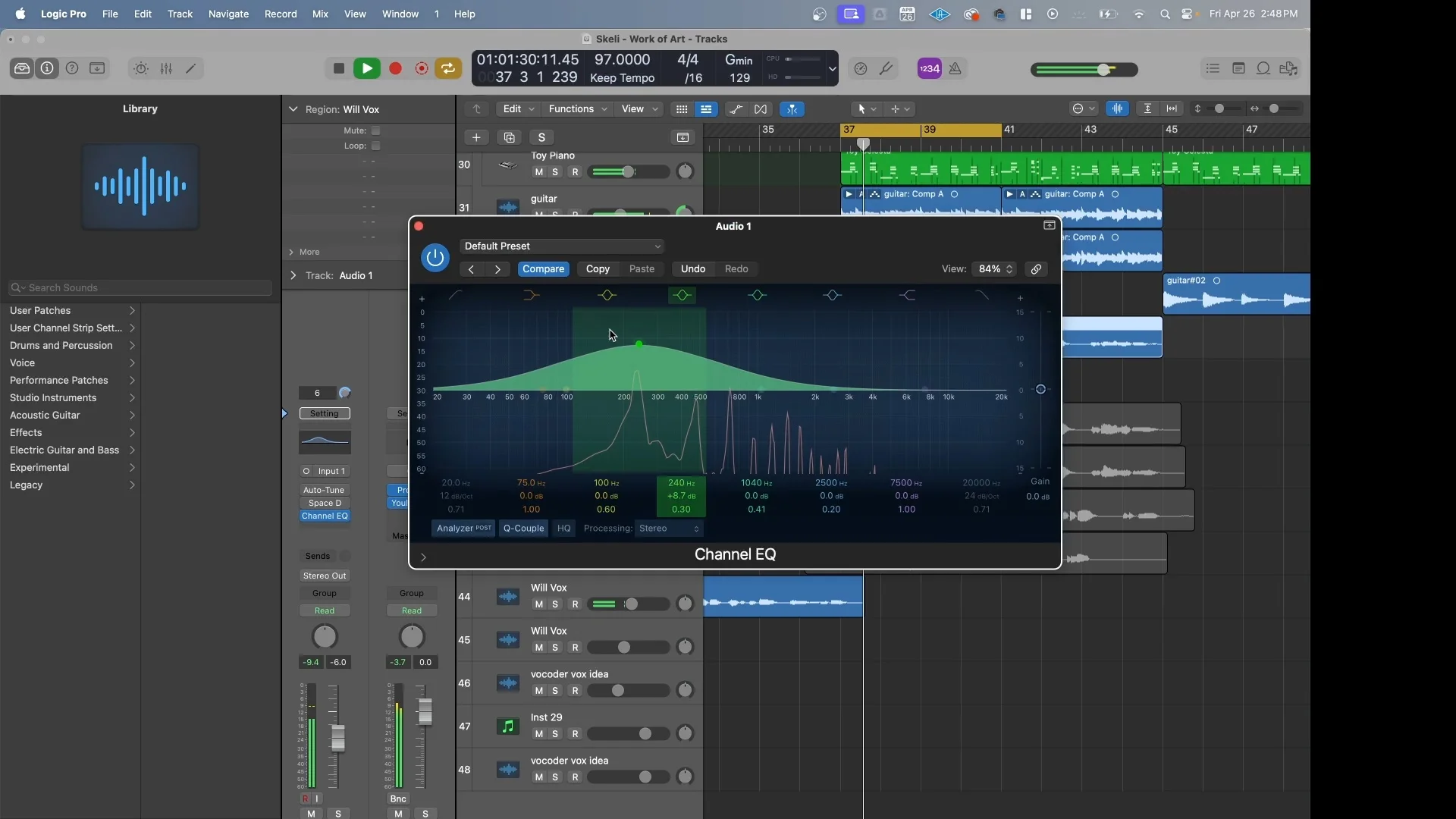
I can follow a recipe. But I can’t be him.
What Actually Did Change
I’m not gonna pretend nothing changed in 20 years.
His voice settled about three semitones lower as he aged — from a G#3 in 2009 to an E3 now. Tempos crept up about 30 BPM — early Drake was slow, today’s Drake sits mid-tempo.
And he stopped name-dropping money — cut his money references by more than half, probably because he became actually rich.
The man got older. The work didn’t.
The Reveal
Now, let’s look back at those first two clips from the beginning.
The first was Say What’s Real, from 2009. The second was Make Them Remember, from last month.
Did you get it right? Don’t worry if you didn’t — the data couldn’t tell them apart either.
Because Drake’s released the same song for 20 years. Or at least the same recipe.
But here’s what analyzing 481 songs taught me: just because you have a recipe doesn’t mean you can cook like Drake. The framework is there — consistent vocal range, dark filtered beats, repetitive hooks that ignore pop rules, and lyrical themes that never evolve.
The genius isn’t in the ingredients. It’s in the execution.
And that execution involves teams of writers, producers, and years of refinement that turn a simple recipe into something that sounds effortless. The nonchalant delivery, the perfectly placed ad-libs, the way every element sits in the mix — that’s the part you can’t data-mine your way to copying.
Drake found his sound 20 years ago and never left. The question isn’t whether he’s been making the same song — the question is whether that’s actually a problem.
When the recipe works this well for this long, maybe the real skill is knowing when not to change it.
Not sure what’s wrong with your vocal? Run it through my free Vocal Analyzer - it scores your vocal from 0 to 100 and gives you specific recommendations on what to fix first.
About Mattie
Mattie is a music producer, songwriter, and educator specializing in Logic Pro and vocal production. With over 10 years of experience in the music industry, he's helped thousands of artists transform their home studio recordings into professional-quality tracks.
As the founder of Music By Mattie, he creates tutorials, presets, and courses that simplify complex production techniques. His mission is to make professional music production accessible to everyone, regardless of budget or experience level.