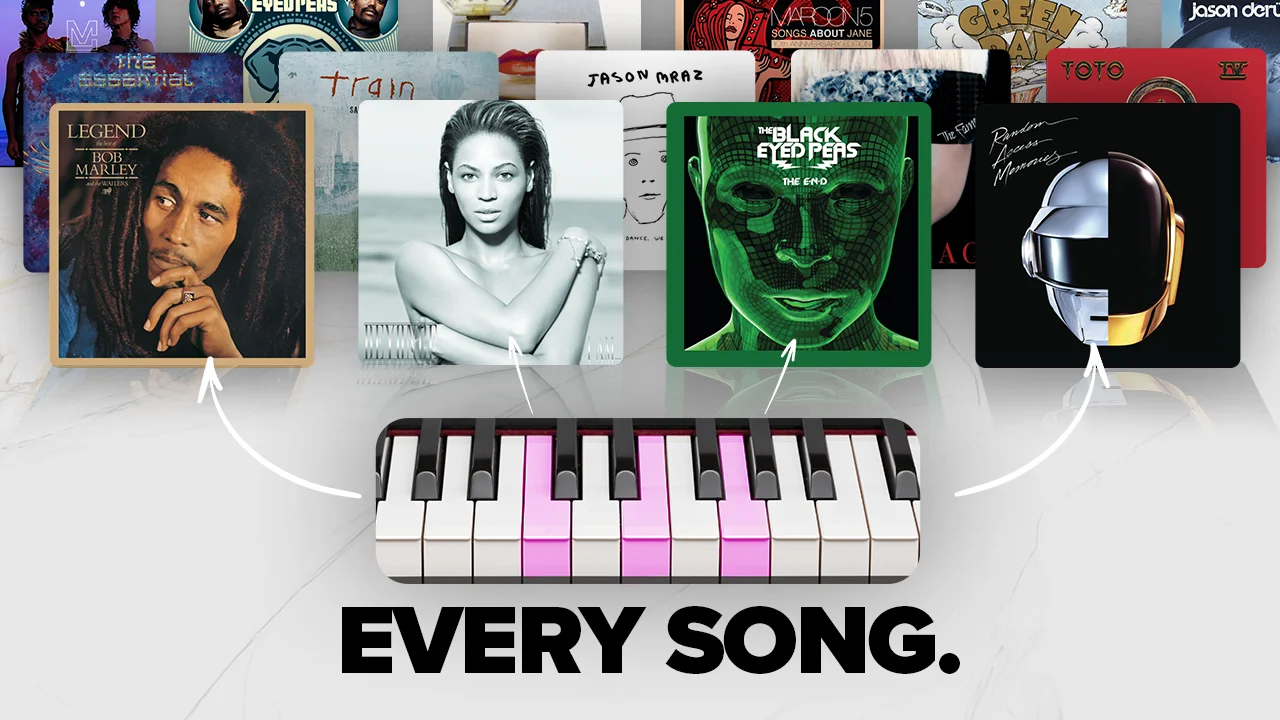
The Four Chords That Almost Every Song Uses
The famous I–V–vi–IV progression (and a few variations) powers a huge chunk of pop music. Here’s how it works, how to transpose it, and how to use it in...

Key Takeaways
- Learn the I-V-vi-IV chord progression to unlock hundreds of popular songs instantly.
- You can transpose these four chords to any key to match your voice.
- Rearranging the same four chords in different orders creates entirely new song vibes.
- Western pop music has trained your ear to love this specific chord combination.
- Start with these chords immediately - they're your shortcut to writing catchy songs.
The chords every song uses
There are four chords that almost every single song uses. And once I learned them, it forever changed the way I listened to music.
And the crazy part is: I learned them by accident.
Let me explain.
When I first started learning guitar, I was bad.
I already knew piano, but moving my fingers and pushing the strings down just didn’t click. For the first couple weeks, I’d sit in my parents’ living room and force myself to play… but I never made real progress. And after a couple weeks, I gave up.
Months went by. My guitar collected dust and stared at me from the corner, begging me to strum it one more time. I ignored it.
Then one day after school, I poured myself a trusty bowl of cereal, opened YouTube, and stumbled into a video that changed my music career forever:
“Four Chord Song” by Axis of Awesome.
These dudes made a medley of a ridiculous number of songs using only four chords. It was hilarious, inspiring, and it lit the guitar fire again.
I picked up my guitar, blew off the dust, looked up the chords… and sure enough, I learned them.
As I played, I kept thinking:
How can you play so many songs with just four chords?
That question sent me down a rabbit hole that I’m still exploring today.
It turns out: a huge percentage of popular songs rely on the same four-chord DNA.
The chord progression (I–V–vi–IV)
The “magic” progression Axis of Awesome introduced me to is:
I–V–vi–IV
In the key of C major, that’s:
- C – G – Am – F
Sound familiar?
- Don’t Stop Believin’
- Where Is the Love?
- Hey Soul Sister
- I’m Yours
Transpose it to any key
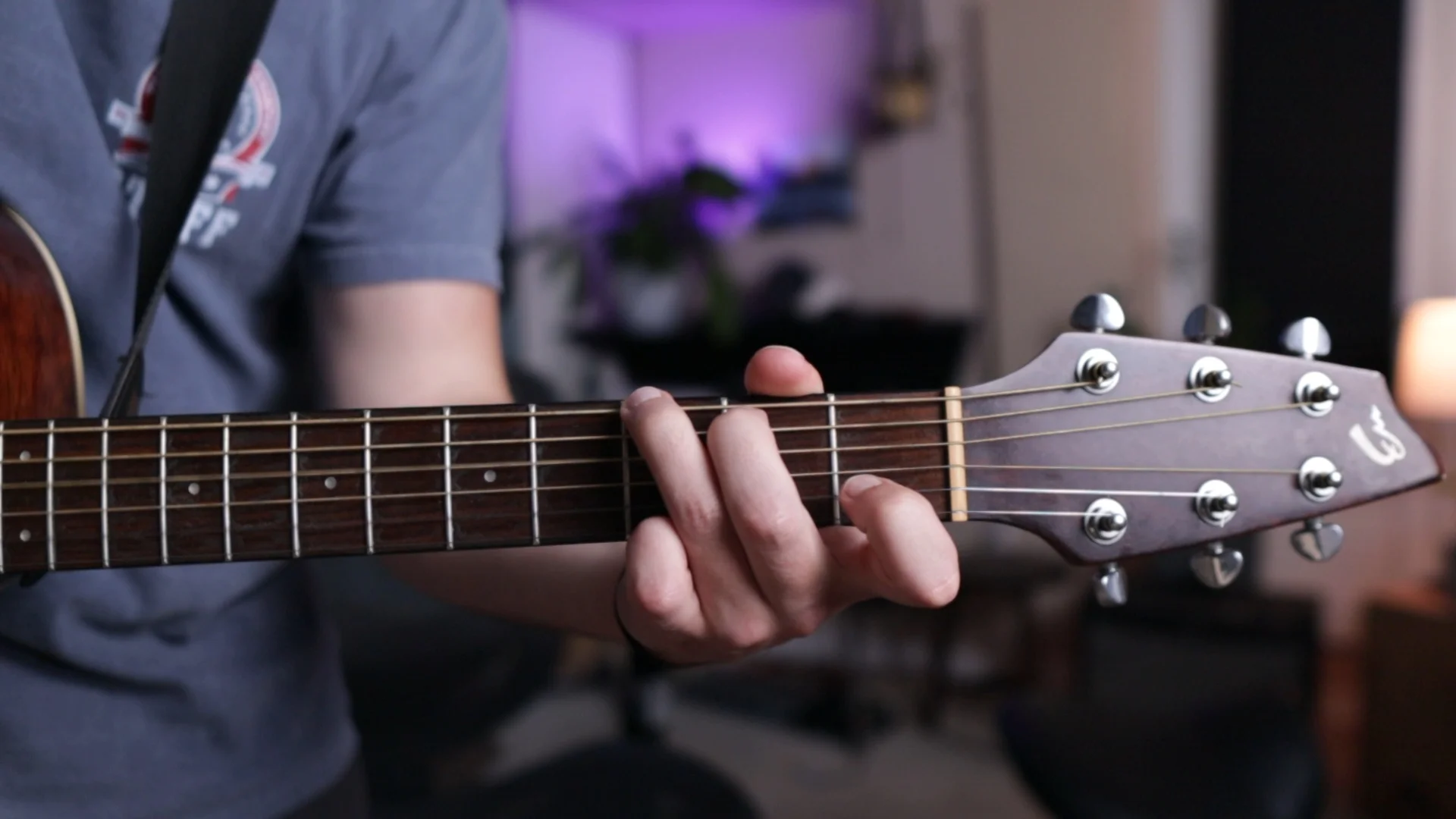
The reason this progression is so powerful is that you can move it into any key.
For example, in G major it becomes:
- G – D – Em – C
Examples you might recognize:
- Can You Feel the Love Tonight
- Let It Be
- Take On Me
- No Woman No Cry
Notice how changing the key affects the pitch range — where your voice sits, where the melody wants to live, and what feels “comfortable” to sing.
If you want a cheat sheet that shows this progression in all keys, I made a free PDF you can download:
Download: Four Chord Guide
Switching it up (same chords, different order)
I–V–vi–IV is insanely popular… but you can cover even more songs by rearranging the order.
More minor sound: vi–IV–I–V
In C major:
- Am – F – C – G
Songs that live in this vibe:
- Grenade
- Love the Way You Lie
- Numb
Another common one: IV–I–V–vi
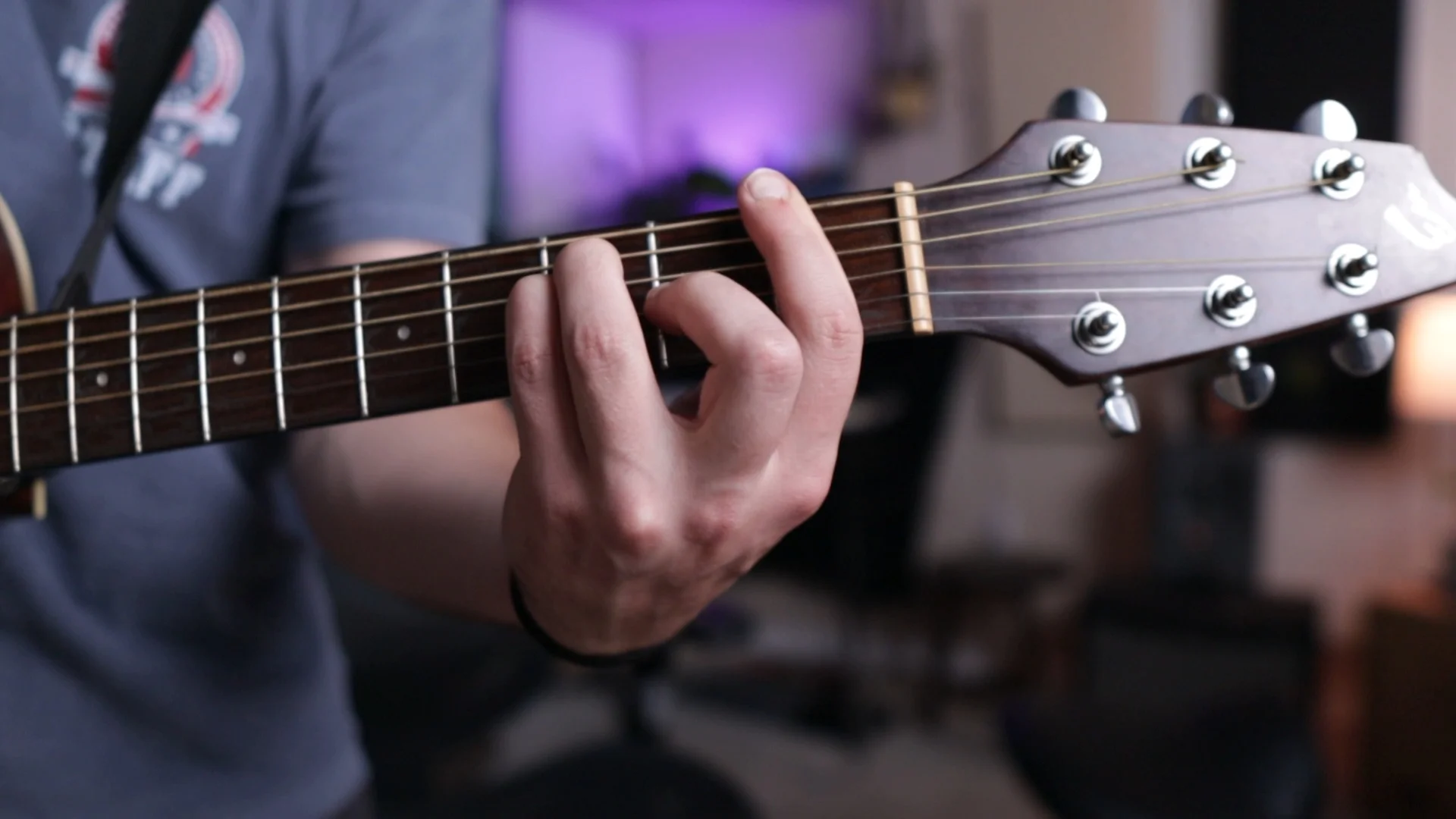
In C major:
- F – C – G – Am
Recognize these?
- Pompeii
- Fast Car
- Let It Go
And honestly… you can throw these four chords in a random order and there’s a decent chance a popular song has already done it.
Why it works
It’s wild that four chords can power a lifetime of hits — but it works because (whether we realize it or not) these sounds are what we’ve been trained to hear, appreciate, and enjoy in popular Western music.
Would it feel the same if you only listened to Arabic music your whole life? Probably not — and that’s fine.

These four chords are a piece of the “formula” for Western pop music… and I’ve basically handed you a key to the kingdom.
My hope is that after learning these chords, you’ll be inspired to start using them immediately — maybe even dust off that guitar in your attic and start shredding it like a block of cheese.
Free cheat sheet + next video
If you want the progression in more keys and more examples:
Download: Four Chord Guide
And if you want to go deeper down the music theory rabbit hole, I made a video that explains the basics for producers:
Part of the Songwriting series — For the full picture, read my complete songwriting guide.
Want the full walkthrough? My course Pro Vocals in 60 Minutes takes you from raw recording to polished vocal, step by step.
About Mattie
Mattie is a music producer, songwriter, and educator specializing in Logic Pro and vocal production. With over 10 years of experience in the music industry, he's helped thousands of artists transform their home studio recordings into professional-quality tracks.
As the founder of Music By Mattie, he creates tutorials, presets, and courses that simplify complex production techniques. His mission is to make professional music production accessible to everyone, regardless of budget or experience level.